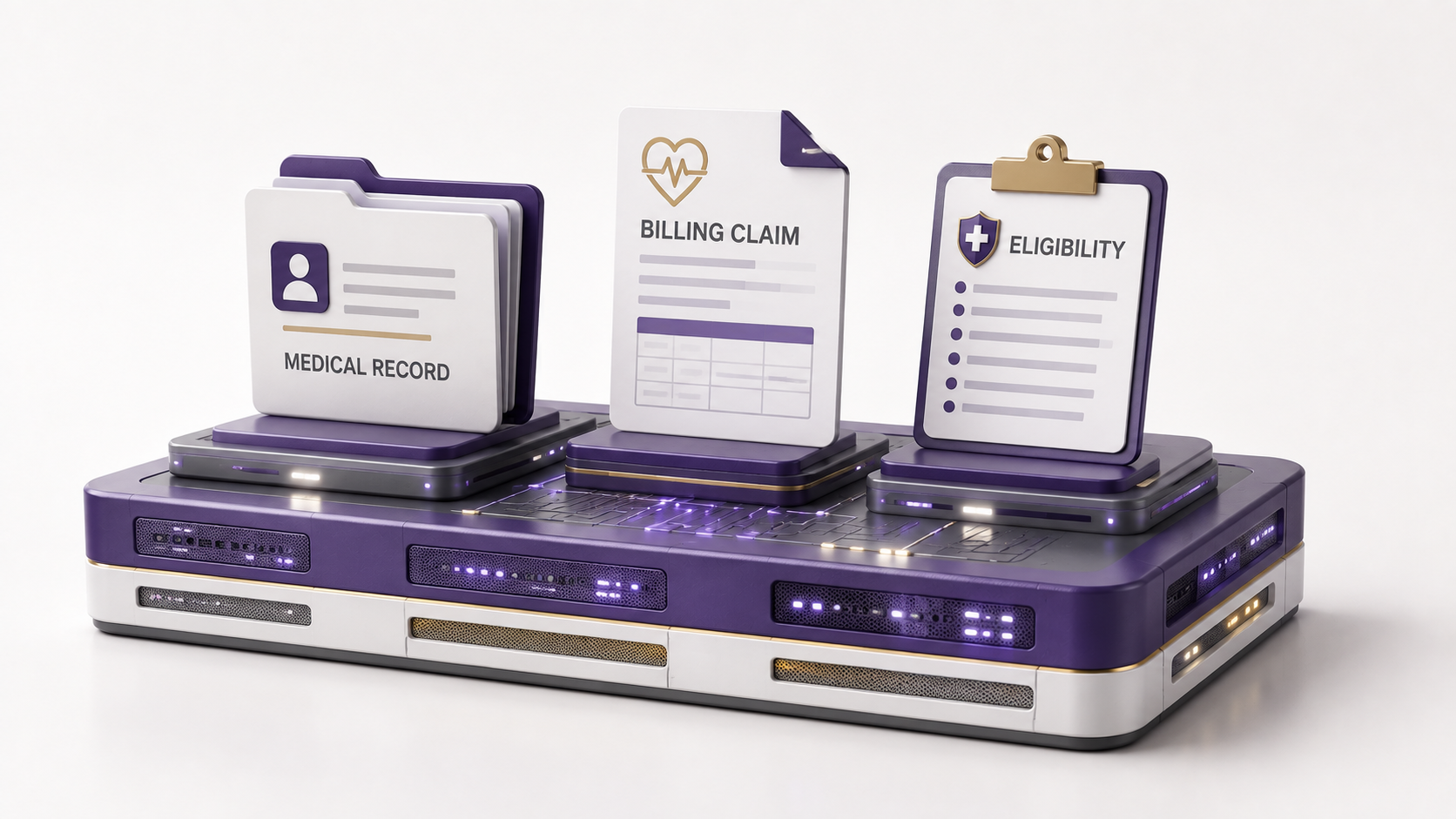
How the Right Healthcare IT Provider Supports Security, Compliance, and Operations
Technology has become essential to every aspect of modern medical practice operations. From electronic health records and practice management software to cybersecurity and patient communication, nearly every workflow depends on reliable technology working behind the scenes.
Because of this, selecting an IT partner is no longer just a technical decision. It is an operational one.
The right healthcare IT provider can help protect patient information, support regulatory compliance, reduce workflow disruptions, and maintain revenue cycle continuity. A poorly matched or inadequately prepared provider can contribute to downtime, security gaps, and inefficiencies that affect departments throughout the practice.
Understanding what to look for in a healthcare IT partner can help practice leaders make a decision that supports long-term operational stability rather than simply solving today’s technical problems.
Key Takeaways
- Evaluate healthcare IT as part of a medical practice’s operational infrastructure, not simply as technical support.
- Healthcare-specific experience matters because technology decisions intersect with clinical workflows, HIPAA responsibilities, billing systems, and third-party vendors.
- Practices should clearly establish which security, backup, access, incident-response, and disaster-recovery responsibilities belong to the IT provider and which remain with the practice.
- A BAA is important when an IT provider functions as a HIPAA business associate, but the agreement does not eliminate the need to understand how the vendor safeguards PHI.
- Technology downtime can affect documentation, billing, claim submission, cash flow, patient care, and staff productivity.
- Vendor evaluations should consider healthcare experience, security, response times, recovery capabilities, communication, and responsibility boundaries—not price alone.
Table of Contents
Healthcare IT Is More Than Technical Support
Many practices think of IT as the company that fixes computers, installs software, or resets passwords. While those services matter, healthcare IT goes much further.
Technology supports nearly every operational function within a medical practice. Clinical documentation, scheduling, insurance verification, electronic prescribing, imaging, billing, and patient communication all depend on secure, reliable systems.
When those systems fail, the impact reaches well beyond inconvenience. Providers lose access to patient information, appointments may be delayed, billing workflows slow down, and staff spend valuable time working around technical problems instead of focusing on patient care.
For that reason, healthcare IT should be viewed as part of your operational infrastructure, not simply a support service.
Why Healthcare Experience Matters
Not every IT company understands the unique requirements of a medical practice.
General business IT providers often focus on keeping systems operational but may have limited experience with healthcare regulations, electronic medical records, or the security requirements surrounding protected health information.
A healthcare-focused IT provider should understand how technology decisions affect HIPAA compliance. They should be able to explain how access controls, secure data transmission, encryption, backups, disaster recovery, and other safeguards support the practice’s responsibilities under applicable HIPAA Privacy and Security Rule requirements.
They also understand how medical software integrates with billing systems, laboratory interfaces, imaging platforms, and payer connections. That experience helps reduce implementation problems and allows technology to better support existing clinical and administrative workflows.
Practices should ask prospective IT providers which healthcare systems they routinely support. They should also ask how they coordinate with EHR vendors, practice management systems, medical billing clearinghouses, laboratories, imaging platforms, and other third parties when problems cross organizational boundaries.
Technical Deep Dive
In an integrated healthcare environment, troubleshooting often requires determining which vendor owns the failing connection rather than simply identifying the visible symptom. Practices should evaluate whether their IT partner can coordinate cross-vendor escalation so interface, connectivity, or transmission failures do not stall while multiple vendors redirect responsibility.
Security Is an Ongoing Operational Responsibility
Cybersecurity has become one of the most significant operational risks facing healthcare organizations.
Medical practices store highly sensitive patient information, making them frequent targets for ransomware attacks, phishing attempts, and other cybersecurity threats. While security software plays an important role, protecting patient information requires much more than installing antivirus programs.
An experienced healthcare IT partner should be able to explain the layered security measures it recommends, what it manages directly, what remains the practice’s responsibility, and how those controls are monitored over time.
- Role-based user access
- Multi-factor authentication
- Encrypted devices and backups
- Secure remote access
- Network monitoring
- Regular software updates and security patching
Just as important, the practice and its IT provider should establish incident-response procedures before a security event occurs. These procedures should establish who to contact, how to isolate affected systems, and how to continue operations during downtime. They should also establish which responsibilities belong to the practice, the IT provider, and other vendors.
A security event rarely affects only the IT department. It can interrupt patient care, delay billing, prevent staff from accessing records, and create regulatory and compliance concerns. Reducing these risks requires ongoing oversight, not occasional maintenance. This includes monitoring security controls, applying patches, reviewing access, maintaining backups, and responding when vulnerabilities or system changes are identified.
Compliance Alert
A security incident can expose dangerous ownership gaps if response duties have never been assigned and tested. Leadership should know in advance who has authority to isolate systems, coordinate vendors, activate downtime procedures, and manage compliance-related actions rather than trying to establish accountability during an active event.
Compliance Should Be Built Into Your Technology
HIPAA compliance is often viewed as a documentation exercise, but technology plays a central role in maintaining compliance.
Access permissions should reflect each employee’s responsibilities. Staff should only have access to the information necessary to perform their job. Audit logs should document system activity, and patient data should remain protected whether it is stored on local servers or cloud-based platforms.
Practices should determine whether an IT provider will create, receive, maintain, or transmit protected health information on the practice’s behalf. When the provider functions as a HIPAA business associate, practices should ensure an appropriate Business Associate Agreement (BAA) is in place. The BAA establishes required protections and responsibilities for protected health information. However, signing the agreement does not replace the practice’s responsibility to evaluate how the vendor actually safeguards that information.
Compliance Alert
A signed BAA establishes contractual obligations, but it should not be treated as evidence that a vendor’s security practices are adequate. Vendor oversight should also examine how protected information is accessed, stored, transmitted, backed up, and secured in day-to-day operations.
An IT provider unfamiliar with these requirements may unintentionally expose the practice to compliance risks that become apparent only during an audit or security incident.
Technology Directly Affects Revenue Cycle Performance
Reliable technology does more than keep computers running—it helps protect revenue.
Electronic claim submission, eligibility verification, payment posting, patient statements, and payer communications all rely on stable systems. Even brief downtime can delay billing, disrupt cash flow, and create additional work for administrative staff.
System outages can also affect documentation completion, delaying coding and claim submission long after the technical issue has been resolved.
Operational Snapshot
The financial impact of downtime can continue after systems return to service. Documentation backlogs, delayed coding, interrupted eligibility work, and queued claims can create a revenue-cycle recovery period that leadership should account for when evaluating the true operational cost of an outage.
When evaluating an IT partner, practices should ask how they monitor system performance and how quickly they respond to outages. They should also ask what disaster recovery procedures are in place if critical systems become unavailable.
Do not evaluate disaster recovery only by asking whether backups exist. Practice leaders should understand what is backed up and how frequently backups occur. They should understand whether backup failures are monitored and how restoration is tested. They should also understand what the practice should expect if critical systems must actually be recovered.
These operational questions are often more valuable than simply comparing monthly service costs because a lower-priced IT contract can become expensive when slow response times, recurring outages, or poorly defined responsibilities interfere with patient care and revenue cycle operations.
Evaluating a Healthcare IT Partner
Before signing an agreement, practices should clarify support hours, escalation procedures, expected response times, after-hours coverage, and which services may incur additional charges. These details are easier to resolve during vendor selection than during an outage or security incident.
A productive evaluation should also focus on how well the company understands healthcare operations and supports your practice’s daily functions.
One of the most important questions is not simply what services an IT company provides. It is where its responsibility ends. Practices should clearly define who manages user access, security monitoring, software patching, backups, device replacement, vendor coordination, incident response, and disaster recovery. Undefined responsibilities can create gaps where the practice assumes the IT company is monitoring something the IT company considers outside its scope.
Operational Snapshot
The most consequential service gap may be a task that neither party realizes is unassigned. Converting the IT agreement into a clear responsibility map gives leadership a practical way to identify unmanaged functions and distinguish vendor deliverables from responsibilities the practice must retain internally.
| Evaluation Area | Why It Matters |
|---|---|
| Healthcare experience | Demonstrates familiarity with medical workflows and regulatory requirements. |
| HIPAA knowledge | Helps reduce compliance and security risks. |
| Cybersecurity strategy | Protects patient information and minimizes business disruption. |
| Response times | Reduces operational downtime when issues occur. |
| Backup and disaster recovery | Supports business continuity during unexpected events. |
| Vendor coordination | Simplifies communication with EMR vendors, billing platforms, and other technology partners. |
The goal is not simply to hire someone who can resolve technical issues. It is to partner with a company that understands how technology influences every part of your operation.
Communication Matters Just as Much as Technical Expertise
One of the most overlooked qualities of a successful IT partner is communication.
Technology decisions often involve administrators, providers, billing teams, and clinical staff. Each group has different priorities and varying levels of technical knowledge.
An effective IT provider should be able to explain recommendations in practical terms. This includes why a change is necessary, what risk it addresses, and what it will cost. It also includes which workflows may be affected and what staff should expect during implementation.
Clear communication also improves planning for software upgrades, system maintenance, cybersecurity initiatives, and workflow changes. It gives practice leadership enough time to coordinate staff, notify affected departments, and establish temporary workflows. This helps avoid preventable disruptions to patient care or billing.
Building a Long-Term Partnership
Healthcare technology continues to evolve, bringing new compliance requirements, cybersecurity challenges, and workflow expectations.
Rather than relying on IT only when something breaks, practices can benefit from a long-term relationship with a healthcare-focused technology partner that understands their systems, workflows, operational priorities, and changing technology risks.
As the practice grows, that relationship becomes increasingly valuable. New providers, additional locations, software implementations, and evolving regulatory requirements all require technology that can scale without creating unnecessary disruption.
Frequently Asked Questions About Healthcare IT Providers
What should a medical practice look for in a healthcare IT provider?
A medical practice should evaluate healthcare experience, cybersecurity capabilities, HIPAA knowledge, response times, backup and disaster recovery processes, and communication. Practices should also clearly establish which technology and security responsibilities the IT provider manages and which responsibilities remain with the practice.
Does a healthcare IT provider need to sign a BAA?
An IT provider generally needs a Business Associate Agreement (BAA) when it functions as a HIPAA business associate by creating, receiving, maintaining, or transmitting protected health information on behalf of the practice. A signed BAA does not replace the need to evaluate the vendor’s actual security practices and handling of PHI.
What cybersecurity services should a healthcare IT company provide?
Services may include multi-factor authentication, role-based access controls, secure remote access, encryption, network monitoring, security patching, backups, and incident-response support. Specific services will vary, so practices should determine what the provider manages directly and whether key security responsibilities remain outside the contract.
How should a medical practice evaluate an IT provider’s backup and disaster recovery plan?
Practice leaders should ask what information and systems are backed up, how frequently backups occur, how failures are monitored, and how restoration is tested. They should also understand how quickly critical systems can be recovered and what temporary workflows will be needed while systems are unavailable.
How can IT problems affect medical billing and revenue cycle operations?
Technology problems can interrupt eligibility verification, documentation, coding, claim submission, payment posting, patient statements, and payer communication. Even after systems are restored, documentation backlogs and delayed claims can create a revenue cycle recovery period that extends the financial impact of the original outage.
What questions should a medical practice ask before hiring an IT company?
Practice leaders should ask about healthcare experience, systems supported, cybersecurity monitoring, support hours, response and escalation procedures, after-hours coverage, backup testing, disaster recovery, incident response, and coordination with EHR and other vendors. They should also identify additional charges and document who is responsible for each critical technology function.
Choosing an IT Partner That Supports the Entire Practice
Technology touches nearly every aspect of a medical practice, making the selection of an IT partner an important operational decision, not simply a technical purchase.
The right healthcare IT provider can support the practice’s compliance efforts, strengthen cybersecurity, protect revenue cycle continuity, and reduce avoidable disruptions to clinical and administrative workflows. More importantly, the provider should understand that technology decisions rarely affect only one system or department. Changes to access, connectivity, software, security, or infrastructure can have consequences throughout the practice.
Practices that evaluate healthcare-specific experience, security expertise, communication, service responsibilities, and operational understanding are better positioned to build technology infrastructure that supports long-term stability. That infrastructure protects patient information and allows providers and staff to focus on patient care.
About the Author
Jennifer Blevens-Smith is the founder and principal consultant of Integral Clinic Solutions. With more than two decades of experience supporting independent medical practices, she helps physicians, practice administrators, and healthcare leaders strengthen credentialing, payer contracting, revenue cycle operations, compliance workflows, and practice management. Her work focuses on translating complex healthcare requirements into practical operational processes. These processes improve consistency, reduce administrative burden, and support long-term practice success.
Need Help Strengthening Your Medical Practice Operations?
Integral Clinic Solutions provides practical support for medical practices navigating credentialing, contracting, revenue cycle operations, compliance workflows, front-office systems, and practice management challenges.
Explore more operational guidance, compliance insights, and healthcare business resources on the Integral Clinic Solutions blog. New articles and updates are added regularly for practice owners, administrators, and healthcare teams.
Disclaimer: This content is for informational and educational purposes only and does not constitute legal, coding, billing, compliance, financial, or medical advice. Healthcare practices must verify all operational requirements with applicable payers, regulators, and qualified professionals. Read our full Legal & Compliance Disclaimer.