
Avoid January Chaos: How to Prepare Your Medical Practice Before Year-End
We’ve officially hit that time of year where everyone is blinking at the calendar, wondering how we got here so fast. For medical practices, November and December aren’t just about holidays and staff potlucks.
This is also the window where year-end medical practice planning either sets you up for a steady, confident January or leaves you scrambling in the first quarter. The good news? You don’t need to make massive, overwhelming changes. You just need to move with intention and review what actually matters.
Key Takeaways
- Start year-end medical practice planning early (November is ideal) to avoid January disruptions, insurance delays, and rushed administrative tasks.
- Reviewing financial performance, payer mix, denial trends, and AR aging provides clarity on upcoming cash flow—especially during deductible season.
- Credentialing and licensing renewals (DEA, state licenses, CAQH, CLIA, malpractice) must be tracked proactively to prevent lapses that stop providers from seeing patients.
- Conduct compliance refreshers for HIPAA, OSHA, CLIA, clean-desk policy, and cybersecurity awareness to protect patient information and reduce audit risk.
- Evaluate staff scheduling, workflows, and service offerings to ensure your practice is structured effectively for the year ahead.
- Confirm technology readiness: update software, replace outdated devices, and verify secure, functioning data backups.
- Check clearinghouse connections, ERA/EFT enrollments, and payer rule changes to avoid claim rejections in January.
- Communicate proactively with patients about schedule changes, insurance updates, holiday closures, and portal access to reduce confusion and no-shows.
- Compile everything into a simple, prioritized action plan that assigns tasks and deadlines—then review it with your team to ensure alignment.
Table of Contents
Financial Review During Year-End Medical Practice Planning
Before we look forward, we need to understand what happened this year. The financial review is the backbone of year-end medical practice planning because your practice’s financial health determines how flexible and prepared you’ll be in Q1.

Evaluating Performance and Payer Mix
Start by looking at your year-to-date revenue, expenses, and net profit. Take time to really absorb those totals. Did expenses creep up more than expected? Did revenue spread across payers the way you anticipated?
Your payer mix is incredibly telling here. Some insurance plans work smoothly and pay fairly. Others feel like battling an endless loop of claim rejections and phone calls. Those details matter when forecasting next year.
Then shift to billing and collections. Pull your denial rates. Review your days in AR. Look at your aging buckets: insurance aging, patient aging, and overall balances.
When you see the shape of your aging, you’re actually seeing what your January and February cash flow will feel like. Deductible season means higher patient responsibility and slower payments. The numbers will tell you how prepared you are.
Quick Reference Table
| What to Review | Why It Matters |
|---|---|
| Payer Mix Trends | Helps decide which payers to renegotiate with |
| Days in AR | Predicts early-year cash stability |
| Insurance vs. Patient Aging | Shows workload and follow-up strategy needed |
| Monthly Net Profit | Shapes budgeting decisions |
Understanding your financial position now avoids panic later.
Credentialing and Provider Licensing in Year-End Medical Practice Planning
This is where many practices accidentally walk into trouble. Credentialing, DEA renewals, CLIA certificates, malpractice updates, CAQH re-attestations, and state license expirations are easy to ignore when everyone is busy. But once something expires, the fallout is immediate and painful.
Avoiding Gaps and Service Interruptions
Imagine discovering in January that a provider’s state license expired. They can’t see patients until it’s renewed. Or that a DEA number lapsed. No controlled substances can be prescribed. Or a CLIA certificate expired. Your practice cannot run in-house labs. These aren’t just inconveniences. They directly affect patient care and revenue.
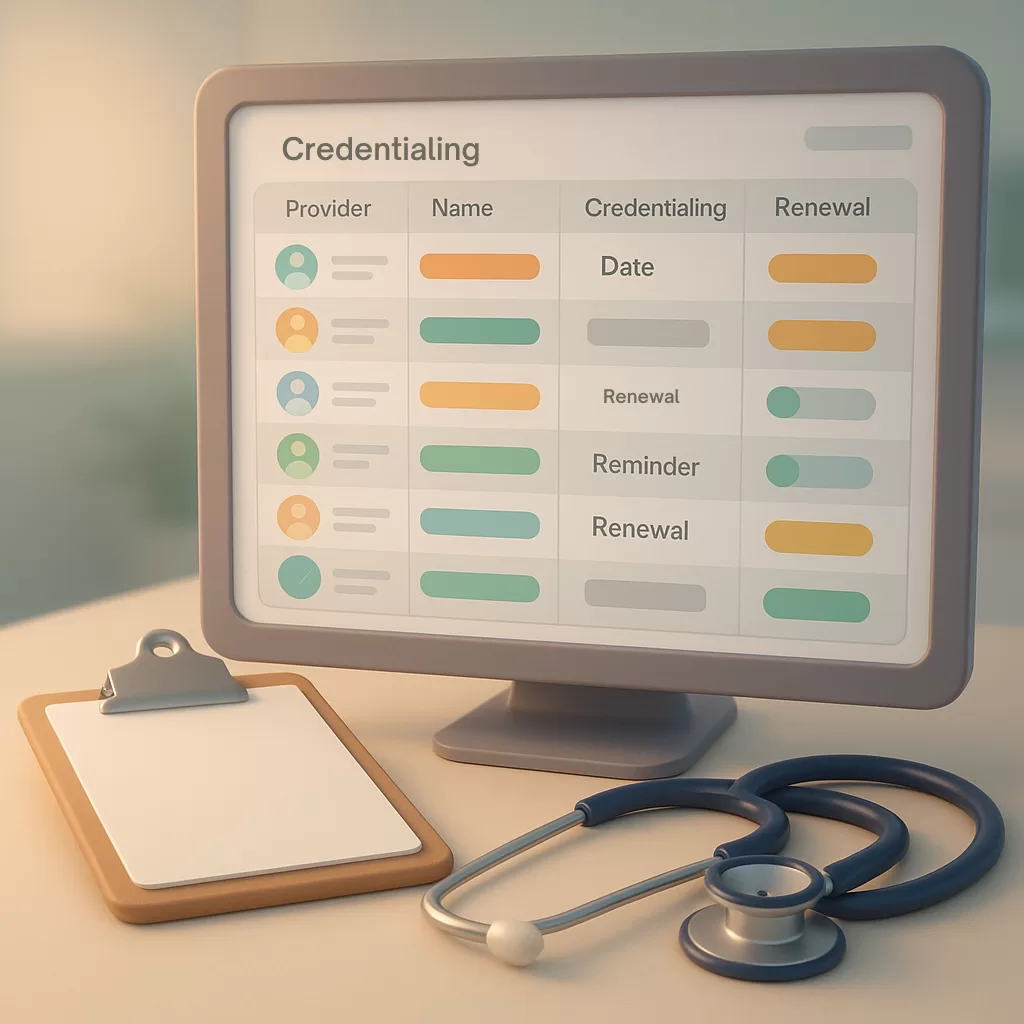
That’s why year-end medical practice planning is the perfect time to create or update your master credentialing tracking sheet. Look at every expiration date for the next six months. Pay special attention to anything falling during holiday staffing slowdowns, because response times from agencies drop dramatically between now and early January.
Future you will be grateful you handled this now.
Reviewing Insurance Contracts and Fee Schedules
Now let’s talk about the money your practice earns for the work you actually provide. Many practices have not requested a fee schedule increase in years simply because no one gets around to it. But year-end medical practice planning creates the perfect timing window.
Requesting an Increase Before January
Insurance companies are not going to call you and say, “Hey, we’d love to pay you more.” You must initiate that conversation. Ideally, you submit your request while preparing for the new year, because it gives you a chance to request the increase be effective January 1. That makes tracking and verifying adjustments incredibly straightforward.
If you’ve been thinking, “I really should renegotiate that,” this is your sign to do it now. And yes — you can absolutely use ChatGPT to help write your increase request letters in a professional, assertive tone that gets attention.
Compliance and Policy Updates in Year-End Medical Practice Planning
Once your financials are reviewed and your credentialing timeline is secured, it’s time to shift into the compliance side of year-end medical practice planning. This is the part that doesn’t always feel exciting, but it makes a massive difference in how stable and legally protected your practice will be next year. Think of this as tightening the bolts before the engine runs hard again in January.
HIPAA, OSHA, and Internal Policy Refreshers
Start by confirming all staff have completed their HIPAA training for the year. Even if everyone has been with you for a while, HIPAA training is not a one-and-done. It’s annual. So pull your training records. If someone is missing a certificate or fell through the cracks, now is the time to catch up.
Then check your OSHA and CLIA logs. Are daily controls documented? Are lab processes logged? Has equipment maintenance been tracked correctly? These logs can slip during busy seasons, so the end of the year is a great place to reset accountability.
If you have a clean desk policy (which every healthcare practice should have), check whether staff are consistently following it. This isn’t just about neat desks. It’s about preventing PHI exposure and avoiding privacy breaches. A messy desk can turn into a HIPAA violation faster than most people realize.

Performing this compliance sweep as part of your year-end medical practice planning gives you clarity about where additional training or re-education may be needed. And it’s always better to find this now than during an audit.
Security Practices and Cyber Awareness
This is also the moment to evaluate your digital security. Cyber threats in healthcare increase every single year. Your practice should review how data is stored, how backups are maintained, and whether your network is secure.
Ask yourself:
- Are your staff aware of phishing attempts?
- Do they know what to do if a suspicious email comes in?
- Are passwords being used responsibly?
This is the perfect time to refresh digital safety reminders and ensure the systems your practice relies on stay protected.
Operational Workflows in Year-End Medical Practice Planning
Operations are where the real day-to-day experience of your practice lives. If the workflow is clunky, unclear, outdated, or undocumented, everyone feels it — staff, providers, and patients. That’s why workflow review is a key component of year-end medical practice planning.
Staffing, Scheduling, and Service Review
Look at whether your staffing levels match your expected patient volume for next year. Are you running lean in a way that causes stress? Are you overstaffed in certain areas and needing to shift duties? Consider seasonal fluctuations, provider schedules, and expected demand.
Then review your scheduling templates. Many practices set up the year’s schedule and forget to roll forward into the new year until January is already underway. This can cause unnecessary delays and confusion. Set your templates now so they’re live on January 1.
Another part of the operational review is deciding whether any services should be added or retired. Maybe patients have been asking for something new frequently. Or maybe there’s a service you offer that no one is using or insurance never reimburses well. These decisions are easier to make when reviewing numbers and operational flow together.

Good year-end medical practice planning means walking into the new year with clarity about who does what, how appointments are structured, and which services truly support your practice and patient outcomes.
Staff Development and Communication Planning
Even the best workflows fall apart if staff aren’t trained, supported, and aligned. So part of year-end medical practice planning should always include evaluating team needs.
Performance Reviews and Expectation Setting
If your team hasn’t had annual performance reviews yet, schedule them now. Even if you are not doing raises, the conversation matters. Staff need clarity. They want to know how they are doing, what you expect going into the new year, and where they have room to grow.
This is also where you identify training gaps. Maybe front desk staff need a refresher before deductible season. Maybe billing needs clarity on documentation requirements. Maybe your MA team needs new flow charts for labs or vitals.
Once you know what needs support, plan a beginning-of-year staff meeting. Not on January 2, when everyone is still in holiday mode. Schedule it a few weeks in, when people have their rhythm back. Use it to realign, answer questions, and set the tone of teamwork.
When staff feel informed and supported, patient care improves, communication improves, and retention gets better. And that matters just as much as billing or scheduling.
Technology and Security Updates in Year-End Medical Practice Planning
Technology is one of those things that works quietly in the background, until suddenly it doesn’t. And when a system goes down in a medical practice, the entire workflow can grind to a halt. That’s why reviewing your tech setup is a key part of year-end medical practice planning. The goal here isn’t to overhaul everything. It’s simply to make sure the tools you rely on every day are ready for the new year.
Checking Devices, Software, and System Performance
Start with the basics. Are the computers in your exam rooms running slowly? Is your front desk printer held together by tape? Has someone been asking for a new scanner since July? These things seem small in the moment, but they create daily inefficiencies that add up over time.
During year-end medical practice planning, take note of the devices that are outdated or unreliable. The end of the year is actually a great time to replace equipment because holiday sales can reduce the cost significantly. Even upgrading just two or three of your most-used devices can make your staff’s daily workflows easier and faster.
Next, check that your EHR is running on the latest version. Many EHR systems push updates regularly. If your software is behind, it may not be secure. Same goes for your billing software, your messaging platform, or any system used to handle patient health information. An outdated system creates a door for cybersecurity risks, and that’s something you want to avoid.
Data Backup and System Redundancy
Now is also the moment to confirm your backups are doing what you think they’re doing. It’s common to believe that something is being backed up, only to learn later that the backup hasn’t been running at all. This is a terrible surprise to discover during a system failure.
Take five minutes to verify:
- Where your backups are stored
- How often they run
- Whether someone knows how to restore them if needed
This is practical protection, not paranoia. When it comes to medical data, you don’t want to rely on luck.
Clearinghouse and Payer Updates in Year-End Medical Practice Planning
Once your systems are confirmed and your devices are functioning well, shift your focus to your clearinghouse and payer connections. This part of year-end medical practice planning is often overlooked, but it can have a major impact on how claims move through your system in January.
Verifying Enrollment Status and Electronic Data Feeds
Check whether any payers you work with will be changing their claims submission rules at the start of the year. Sometimes clearinghouses add or drop payer connections. Sometimes payers change the payer ID used for electronic claims. Sometimes a payer switches to requiring ERAs where they previously sent paper EOBs.
If you walk into January without this information, claim rejections will spike and your AR will rise before you even realize what happened. So it’s important to confirm these details now while you still have the time to adjust.
This is also a good moment to check your ERA and EFT enrollments. If certain insurers are still paying you by paper check, switching to EFT can significantly improve cash flow during high deductible season.
The smoother your claims submission process is, the healthier your Q1 revenue becomes.
Patient Communication Strategy in Year-End Medical Practice Planning
Even the best internal planning isn’t complete without communicating with your patients. This part of year-end medical practice planning makes a big difference in how supported your patients feel and how smoothly your clinic transitions into the new year.
Preparing Patients for Schedule Changes, Weather, and Deductible Season
End-of-year schedules get chaotic fast. People travel. Kids get sick. Weather impacts appointments. If your practice doesn’t communicate clearly, patients feel frustrated or confused.
This is the perfect time to send out a year-end message. It can be a newsletter, a portal message, a text campaign, or even a printed handout. The format matters less than the clarity.
Your communication can include:
- Any holiday or office closure dates
- Reminders about insurance changes starting January
- Encouragement to bring updated insurance cards to appointments
- How to reach your office outside regular hours if needed
- The different communication methods your practice offers (portal, text, voicemail callbacks)

You can also use this outreach to invite patients to schedule their wellness visits or annual screenings. This helps fill future schedules and supports patient health goals at the same time.
Clear communication reduces confusion. It also strengthens trust, which is something every practice benefits from.
Pulling It All Together in Year-End Medical Practice Planning
By this point, you’ve reviewed financial performance, checked credentialing and licensing timelines, tightened compliance processes, updated workflows, strengthened technology systems, confirmed clearinghouse and payer changes, and prepared your patient communication strategy.
Now it’s time to pull everything together so your planning doesn’t live in your head but becomes a real, trackable plan. This is where year-end medical practice planning goes from “ideas” to “action.”
Building a Practical, Repeatable Action Plan
The most effective plans are the ones you can actually follow. This means putting everything you’ve reviewed into a simple, readable format. Nothing complicated. Nothing that requires color-coded spreadsheets with conditional logic formulas. Just a clear, organized structure that lists what needs to happen and who is responsible for it.
Try using a single-page planning sheet that includes four columns:
| Priority Area | Task | Responsible Person | Deadline |
|---|---|---|---|
| Financial Review | Finalize AR follow-up list | Billing Lead | Dec 15 |
| Credentialing & Licensing | Renew upcoming CAQH attestations | Credentialing Coordinator | Nov 30 |
| Compliance | Complete HIPAA training for remaining staff | Office Manager | Dec 20 |
| Operations & Scheduling | Update appointment templates for January | Scheduler | Dec 10 |
| Technology | Verify daily data backups | IT / Security Lead | Weekly |
| Patient Communication | Send year-end message to patients | Front Desk Lead | Dec 5 |
This format does something powerful — it turns work into clarity. Once tasks are assigned and deadlines are clear, the plan becomes manageable rather than overwhelming.
Leading Your Team Through Year-End Medical Practice Planning
You can have the most beautifully organized checklist in the world, but if the people who help run your practice don’t feel supported, informed, or equipped to follow it, the plan won’t get far. That’s why leadership plays a huge role in year-end medical practice planning, even in small clinics.
Communicating with Confidence and Care
Gather your team and walk them through the plan. Not in a rushed hallway conversation. Not through a message lost in someone’s inbox. Set aside intentional time to talk about what’s coming next. Explain the purpose behind each part of it. People respond better when they understand why something matters. This builds buy-in, not resistance.
And remember — leadership doesn’t mean doing everything yourself. It means guiding the direction and empowering your people to carry it out.
A strong team meeting early in the new year helps reinforce this. Schedule it for mid-to-late January, when everyone is back in routine. Use it to celebrate what went well last year, reinforce roles, and address questions. The tone of that meeting sets the energy for the next several months.
Staying Flexible During Year-End Medical Practice Planning
Even with the best preparation, things will still shift. Insurance policies change. Patient volumes rise and fall. A new regulation may come out of nowhere. Flexibility is a quiet superpower in healthcare.
Balancing Structure with Adaptability
Structure gives your practice direction. Flexibility allows your practice to respond without panic. During year-end medical practice planning, your goal isn’t to control every variable. It’s to set yourself up so that when change comes — because it will — you can adjust quickly and calmly.
This is why clarity in roles, training, and workflows matters. It creates a stable foundation that doesn’t crumble when something unexpected shows up.
Frequently Asked Questions (FAQ)
What is year-end medical practice planning and why is it important?
Year-end medical practice planning is the process of reviewing finances, workflows, compliance, technology, and patient communication before the new year begins. It helps your practice avoid January chaos, reduces billing delays during deductible season, and ensures your team starts the year aligned, prepared, and fully credentialed. It creates stability and smoother operations.
How early should a medical practice start year-end planning?
Ideally, planning should begin in early November. This allows enough time to review financial reports, request fee schedule increases, complete performance reviews, confirm license renewals, and communicate changes to patients before holiday schedules disrupt normal operations. Starting early also prevents rushed mistakes and gives staff time to adjust workflows.
Which financial reports should be reviewed at the end of the year?
Focus on year-to-date revenue, expenses, net profit, payer mix patterns, denial rates, and AR aging buckets for both insurance and patient responsibility. These reports reveal where cash flow may tighten during deductible season. Reviewing them helps set realistic goals, adjust budgets, and plan for staffing and service levels in the new year.
Why is credentialing review part of year-end planning?
Licenses, DEA numbers, malpractice renewals, CLIA certificates, and CAQH attestations all have expiration dates that can disrupt patient care if overlooked. Reviewing credentialing during year-end planning prevents lapses that could stop a provider from seeing patients or prescribing medications. It keeps workflows uninterrupted and protects your practice revenue and reputation.
How does patient communication fit into year-end planning?
Patients need clarity around schedule changes, insurance updates, weather interruptions, and deductible season responsibilities. Year-end communication through portal messages, text reminders, newsletters, or front desk handouts helps reduce confusion and no-shows. It also strengthens trust and ensures patients understand how to stay connected with your practice heading into the new year.
Should staff performance reviews be included in year-end planning?
Yes. Year-end is a natural time to evaluate staff performance, clarify expectations for the new year, identify training needs, and offer meaningful feedback. Even when raises aren’t possible, structured conversations support motivation and retention. Performance reviews also ensure that workflows, responsibilities, and communication habits are aligned before January begins.
Why review technology and backups during year-end planning?
Outdated devices, old software versions, or inactive backups can lead to security risks and workflow disruptions. Reviewing technology as part of year-end planning ensures your EHR is updated, data is backed up correctly, and systems are secure. This protects patient data and helps your practice avoid downtime when the year begins.
Wrapping Up: The Heart of Year-End Medical Practice Planning
So here we are — the end of the year. The holidays are coming, schedules will shift, patients will need more communication, and the deductible season is just around the corner. But now, instead of walking into January hoping everything will work out, you’ve taken the time to understand your financial position, confirm your credentialing status, strengthen your compliance systems, align your workflows and staffing plans, check your technology and clearinghouse setups, and communicate proactively with your patients.
This is what year-end medical practice planning is about. It’s not perfection. It’s preparation. It’s taking care of your systems so they can take care of your patients, your staff, and your goals.
And here’s the best part — once you’ve gone through this process once and documented it, you now have a repeatable yearly roadmap. Next year will feel easier, faster, and more confident.
Because you’re not just running a practice.
You’re building something stable, intentional, and resilient.
Take a breath. Look at what you just accomplished. You’re doing the work that truly matters.
Jennifer Blevens-Smith, founder of Integral Clinic Solutions, helping practices master the art of balancing patient satisfaction with quality care.