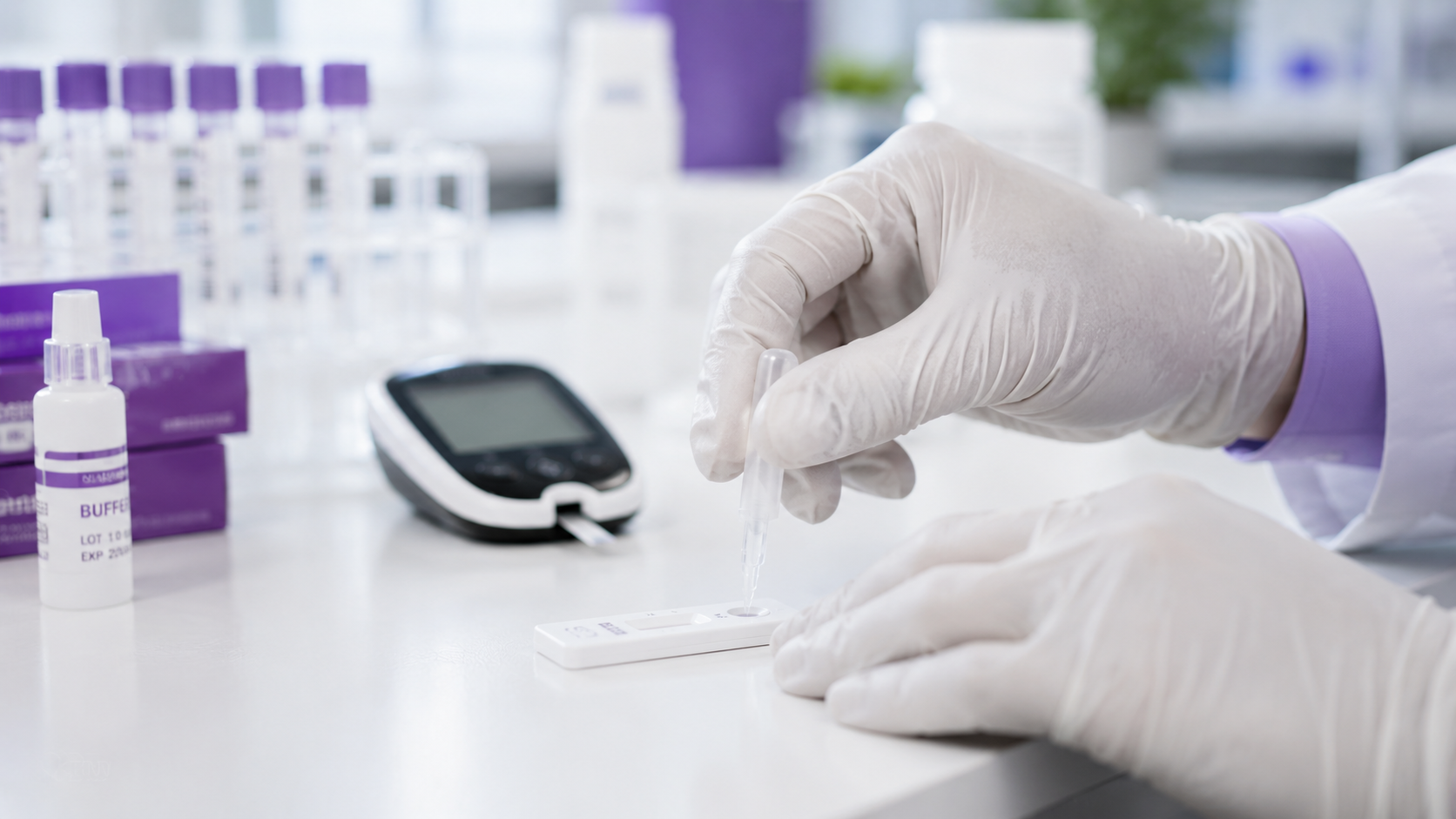
How to Apply for a CLIA Certificate of Waiver: A Step-by-Step Guide for Medical Practices
Many medical practices want to bring basic laboratory testing in-house to improve patient care, speed up clinical decision-making, and create additional revenue opportunities. For services such as rapid strep testing, urine pregnancy tests, glucose monitoring, and urine dipsticks, obtaining a CLIA (Clinical Laboratory Improvement Amendments) Certificate of Waiver is the mandatory regulatory first step.
While the application process is relatively straightforward, inadequate preparation can lead to administrative delays, billing rejections, or compliance issues during state inspections. Understanding the exact federal and state requirements before submitting your application helps ensure a seamless approval process. It also establishes a legally compliant foundation for your point-of-care testing.
Key Takeaways
- A CLIA Certificate of Waiver is required before performing FDA-waived laboratory testing.
- Form CMS-116 must be completed accurately and submitted through the appropriate state agency.
- State requirements may exceed federal CLIA requirements.
- Practices cannot legally bill for waived testing until a CLIA number is issued.
- Quality control logs, staff training records, and adherence to manufacturer instructions remain essential after approval.
Table of Contents
Understanding CLIA Certificates: Waiver vs. Full Certification
The Clinical Laboratory Improvement Amendments (CLIA) establish federal standards for any facility that performs testing on human specimens for diagnostic, preventive, or treatment purposes. However, “CLIA certification” is not a one-size-fits-all framework. The certificate a practice needs depends on the complexity level assigned to its testing menu by the FDA.
To determine where your practice fits, you must understand the five distinct CLIA regulatory pathways scaled to clinical scope:
- Certificate of Waiver (CoW): Designed exclusively for tests classified by the FDA as simple, low-complexity, and carrying a negligible risk of erroneous results when performed strictly according to manufacturer instructions. This is the baseline pathway for most standard medical clinics, adding point-of-care testing.
- Certificate for Provider-Performed Microscopy (PPM): For limited, specific microscopy evaluations (such as wet mounts, pinworm preparations, or urine sediment examinations) performed personally by a qualified physician, dentist, or mid-level provider during a patient visit.
- Certificate of Registration: A temporary, baseline certificate issued to laboratories applying for moderate- or high-complexity testing lines while they await their initial inspection by federal or state surveyors.
- Certificate of Compliance (CoC): Required for labs conducting moderate- to high-complexity tests that choose to clear regular, mandatory biennial inspections conducted by state public health surveyors to prove compliance with all federal CLIA standards.
- Certificate of Accreditation (CoA): Issued to complex laboratory programs accredited through private, CMS-approved organizations (such as CAP or COLA) that enforce equal or more stringent quality standards than the federal government.
For many independent medical organizations, remaining strictly within the scope of a Certificate of Waiver is a strategic operational decision. It allows a practice to provide convenient, real-time diagnostic services. It also minimizes the heavy administrative overhead, higher fee schedules, and mandatory biennial inspections associated with moderate- and high-complexity laboratory programs.
Compliance Alert
A Certificate of Waiver reduces regulatory burden but does not eliminate oversight. State agencies may still conduct audits or complaint-driven inspections, making documentation and manufacturer compliance essential at all times.
However, a common misconception among practice managers is that “waived” means “unregulated.” While waived laboratories are exempt from routine, scheduled federal inspections, they remain legally bound by CLIA regulations. State public health departments may still conduct random audits, unannounced inspections, or complaint-based investigations. Violating manufacturer protocols or failing to maintain proper documentation can result in the immediate suspension of your certificate and the clawback of paid insurance claims.
Step 1: Identify and Document Your Intended Test Menu
Before downloading the application, practices must identify the exact waived tests they plan to offer. This list cannot be a vague generalization; it must match the specific test kits you intend to purchase, as CMS requires cross-referencing with FDA-waived databases.
This upfront planning prevents misalignments among your clinical workflow, inventory management, and revenue cycle. For each test you intend to perform, compile the following operational data:
| Information Needed | Operational & Regulatory Impact |
| Exact Test Name & Analyte | Ensures the specific test kit is on the official FDA CLIA-waived list. |
| CPT Code(s) & QW Modifier | Required for billing; most waived tests require the -QW modifier for Medicare/Medicaid reimbursement. |
| Manufacturer & Kit Specifics | Establishes the exact package insert instructions your staff must follow by law. |
| Estimated Annual Test Volume | Required for Section V of Form CMS-116 to calculate potential scope of operations. |
Commonly performed waived tests include rapid Group A Strep, visual or digital urine pregnancy testing, blood glucose monitoring via handheld meters, rapid Influenza A+B, and automated urine dipstick analysis. However, waiver status applies to specific test systems rather than general categories, making it essential to cross-reference the manufacturer kit with the FDA database of currently waived analytes before building your menu.
Practices should only list tests they realistically plan to implement within the first 6 to 12 months. Expanding your test menu later simply requires a rapid notification to your state agency rather than an entirely new application.
Step 2: Obtain Form CMS-116 and Verify State-Specific Rules
The formal application process centers around Form CMS-116 (Clinical Laboratory Improvement Amendments Application for Certification). While this is a federal CMS document, the federal government does not process it directly. Instead, the application must be submitted directly to the local office found in the official CMS directory of regional CLIA State Agency contacts based on where your physical practice operates.
This is a critical juncture where many practices face delays: state laws can be more stringent than federal laws. For example, states like California, Florida, and New York enforce additional laboratory personnel licensing or state-level facility registrations alongside the federal CLIA certificate. Always download the application via your state’s Department of Health portal. This helps ensure you receive accompanying state-specific addendums, local fee schedules, and the correct regional submission address.
Step 3: Complete the Application with Regulatory Precision
Form CMS-116 is legally binding. Typographical errors or mismatched data points will result in immediate rejection, forcing your practice to restart the processing timeline. To avoid common pitfalls, review a granular, section-by-section breakdown of how to fill out Form CMS-116 properly before entering your data. Pay meticulous attention to these four critical sections:
Section I: Type of Application & Certificate Type
Select Initial Application and explicitly check the box for Certificate of Waiver. Checking the wrong box can inadvertently register your practice for moderate-complexity testing, triggering mandatory inspections, higher fees, and stricter personnel requirements that your practice may not be equipped to meet.
Section II & III: Facility Information & Multiple Locations
The legal laboratory name and address must exactly match the physical location where the testing occurs. If your practice operates a mobile clinic or has multiple physical branches, you must evaluate whether you qualify for a multi-site exception or if each distinct physical address requires its own independent CLIA certificate.
Section IV: Laboratory Director Qualifications
The designated Laboratory Director carries ultimate legal and operational liability for the testing site. For a Certificate of Waiver, the director must be a licensed physician (MD/DO), podiatrist, or dentist in good standing with the state medical board. Note: Some states allow mid-level providers (NPs or PAs) to serve as waived lab directors, while others strictly forbid it. Verify your local state practice act before signing.
Section V: Estimated Testing Volumes
Input the realistic annual testing volumes gathered in Step 1. While these are estimates, they must be grounded in actual patient volume projections, as significantly skewed data can flag an application for administrative review.
Step 4: Submit, Await Your Fee Coupon, and Activate Billing
Once finalized and signed by the Laboratory Director, submit the application packet directly to your local CLIA State Agency. Do not send payment with your initial application.
The state agency will process your application using your required business email address, as CMS has transitioned to an entirely paperless billing system that issues electronic fee coupons and requires online payment. The current federal biennial fee for a Certificate of Waiver is a modest $180, though state-level registration fees may apply concurrently. Once the payment is cleared by CMS, your official 10-digit CLIA identification number will be issued, and your physical certificate will be mailed.
Compliance Alert
A practice cannot legally perform or bill for waived laboratory testing until its CLIA number has been issued and activation is confirmed. Filing claims before certification can trigger denials, reimbursement delays, and billing compliance concerns.
Important Operational Note: You cannot legally perform or bill for any laboratory tests until you have your physical certificate or an official confirmation letter containing your active CLIA number. Attempting to submit insurance claims for waived tests prior to this activation date will result in immediate denials and potential flags for billing non-compliance.
Building a Post-Approval Compliance Infrastructure
Receiving the certificate is only the beginning. Practices must also maintain ongoing compliance with CLIA requirements. Because waived tests are simple, clinical staff can easily become complacent. During a targeted or random state audit, inspectors frequently cite waived laboratories for the following avoidable infractions:
- Expired Reagents: Retaining or using test strips, controls, or kits past their expiration date.
- Environmental Control Failures: Failing to log daily refrigerator or room temperatures where testing supplies are stored, violating manufacturer storage specs.
- Absent Quality Control (QC) Logs: Failing to run, document, and sign off on positive and negative liquid controls for new kit lots, new shipments, or at regular intervals dictated by the manufacturer.
- Lack of Training Records: Failing to maintain documented, signed competency assessments proving that every medical assistant or nurse performing the tests has been explicitly trained on that specific manufacturer’s device.
- Off-Label Testing: Deviating from the exact manufacturer timing or step-by-step instructions. Warning: Modifying a waived test protocol may cause the test to lose its waived status, creating a serious compliance risk.
For a broader review of CLIA compliance, quality control, staff competency, and revenue cycle considerations, see our full guide to CLIA waivers and certifications.
Successfully Applying for a CLIA Certificate of Waiver
Navigating the CLIA Certificate of Waiver application is a highly manageable regulatory process when approached with precise, structured documentation. By aligning your clinical test menu with your state-specific rules and completing Form CMS-116 with total accuracy, your practice can avoid unnecessary operational friction.
Operational Snapshot
A CLIA Certificate of Waiver allows practices to bring common diagnostic testing in-house without the extensive oversight required for moderate- or high-complexity laboratories. The greatest operational benefits come from combining accurate enrollment with disciplined documentation, staff training, and adherence to manufacturer protocols.
The ultimate key to long-term success lies in treating your waived laboratory with the same regulatory respect as a high-complexity facility. Establishing standardized operational procedures, rigid quality control logs, and verified staff training frameworks before your first patient test helps ensure that your in-house lab remains a powerful clinical and financial asset. It also helps prevent it from becoming an audit liability.
Questions Medical Practices Ask About CLIA Waivers
How long does it take to receive a CLIA Certificate of Waiver?
Processing times vary by state and application volume. Many practices receive their CLIA number within several weeks after submitting Form CMS-116 and paying the required fees. Contact your state CLIA agency for current processing estimates.
Can I perform waived testing before my CLIA number is issued?
No. Practices should not perform or bill for waived laboratory testing until they receive an active CLIA number and official approval from the appropriate agency.
Does each practice location need its own CLIA Certificate of Waiver?
What information is required on Form CMS-116?
The application typically requires facility information, ownership details, laboratory director information, certificate type selection, and estimated testing volume. Practices should also identify the waived tests they intend to perform.
How often does a CLIA Certificate of Waiver need to be renewed?
A CLIA Certificate of Waiver is generally valid for two years and must be renewed before expiration to avoid interruptions in testing operations and billing activities.
Can I add additional waived tests after approval?
Yes. Many practices expand their testing menu after receiving approval. Requirements vary by state, so practices should notify the appropriate agency when required and ensure all new tests are FDA-waived.
About the Author
Jennifer Blevens-Smith is the founder and sole consultant driving Integral Clinic Solutions. Armed with deep domain expertise and a commitment to protecting independent medicine, she delivers the personalized, executive-level guidance that healthcare leaders need to build sustainable, high-performing organizations.
Need Help Strengthening Your Medical Practice Operations?
Integral Clinic Solutions provides practical support for medical practices navigating credentialing, contracting, revenue cycle operations, compliance workflows, front-office systems, and practice management challenges.
Explore more operational guidance, compliance insights, and healthcare business resources on the Integral Clinic Solutions blog. New articles and updates are added regularly for practice owners, administrators, and healthcare teams.
Disclaimer: This content is for informational and educational purposes only and does not constitute legal, coding, billing, compliance, financial, or medical advice. Healthcare practices must verify all operational requirements with applicable payers, regulators, and qualified professionals. Read our full Legal & Compliance Disclaimer.