Why NDC Accuracy Matters More Than Most Medical Practices Realize
Last Updated: July 2026 | Reviewed for current 2026 CMS and CPT billing compliance standards.
National Drug Codes (NDCs) often receive less attention than CPT or HCPCS codes, but they play a critical role in medication billing. For practices that administer injectable medications, vaccines, biologics, or other office-based drugs, NDC accuracy directly affects reimbursement, claim processing, and compliance.
Many NDC-related denials are preventable. Common causes include selecting the wrong product, submitting an incorrectly formatted code, miscalculating units, or reporting an NDC that does not match the medication administered. These errors may seem minor, but they often create unnecessary rework, delay payments, and increase administrative burden across the revenue cycle.
Strong NDC management is less about memorizing codes and more about building workflows that consistently capture the right information from the moment a medication is administered through final claim submission.
In my two decades of auditing revenue cycle workflows, I have found that NDC denials are rarely the result of a single coding error. Instead, they are usually systemic failures. They are often caused by a disconnect between clinical documentation in the EHR and the billing team’s inventory management system. Practices with consistently accurate medication claims rely on standardized workflows instead of individual memory.
Who This Article Is For
This article is intended for physician practices, specialty clinics, ambulatory surgery centers, infusion centers, federally qualified health centers, medical billers, practice administrators, and revenue cycle professionals responsible for billing physician-administered medications.
Key Takeaways
- NDC accuracy directly affects reimbursement and claim processing.
- Many NDC denials stem from workflow failures rather than coding knowledge.
- HCPCS units and NDC units serve different purposes and should not be assumed to match.
- Standardized documentation improves billing accuracy and reduces administrative rework.
- Coordination between clinical, inventory, and billing teams strengthens revenue cycle performance.
Table of Contents
Operational Snapshot
Accurate NDC billing depends on reliable workflows rather than memorizing codes. Capturing the correct medication details at administration and validating them before claim submission helps reduce denials, payment delays, and unnecessary administrative work.
Understanding the Purpose of an NDC
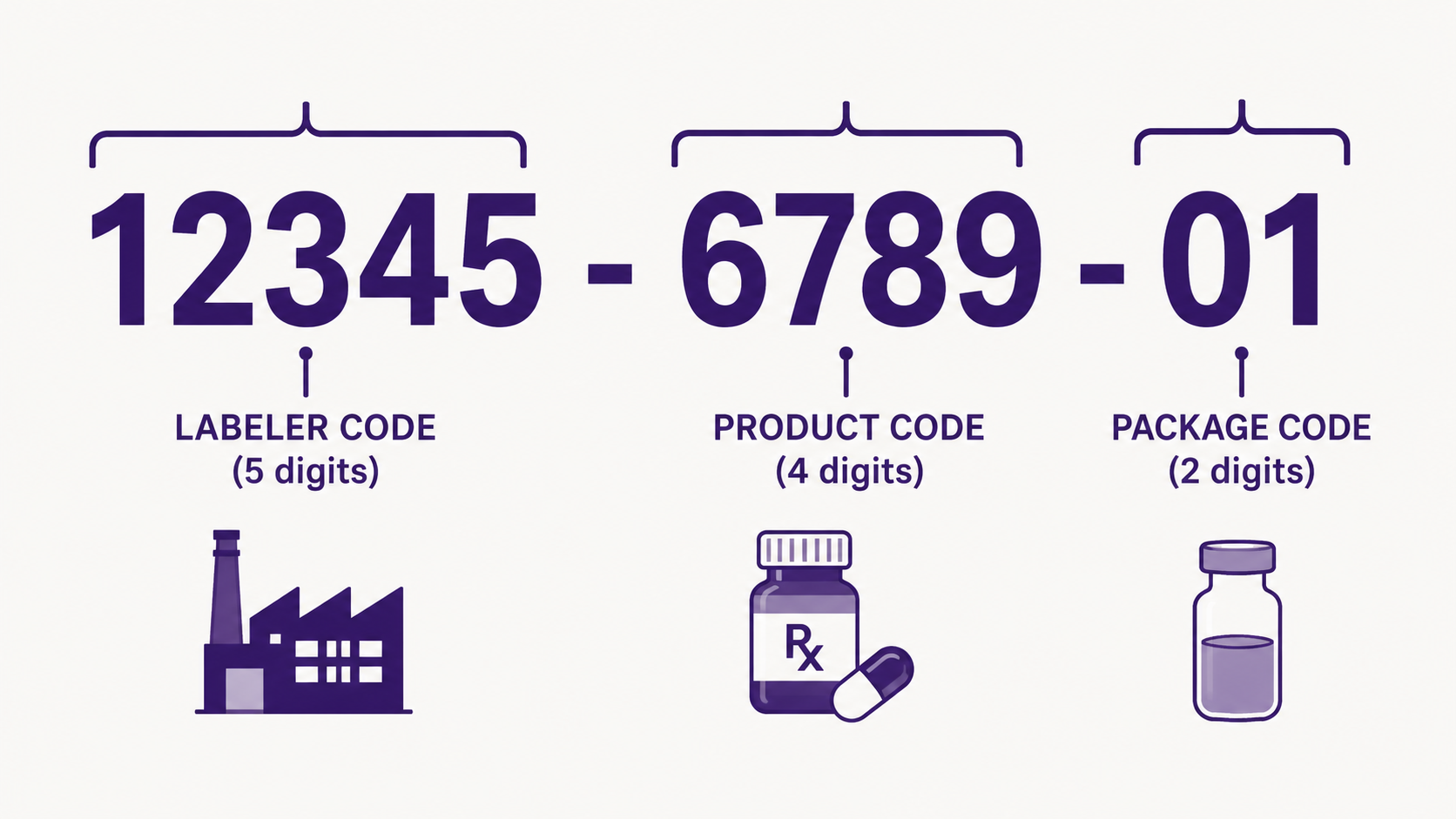
An NDC, or National Drug Code, is a unique identifier assigned to medications marketed in the United States. The code identifies three important pieces of information:
| Component | Purpose |
|---|---|
| Labeler Code | Identifies the manufacturer or distributor |
| Product Code | Identifies the medication, strength, and dosage form |
| Package Code | Identifies the package size and configuration |
Together, these components allow payers to determine exactly which product was administered rather than relying solely on a procedure code. Practices can verify product information using the FDA National Drug Code Directory.
While CPT and HCPCS codes describe the service or billable drug, the NDC identifies the specific medication supplied. That additional level of detail is essential for many payers when determining reimbursement.
Why National Drug Code (NDC) Errors Lead to Claim Denials
Many Medicare, Medicaid, and commercial payers use NDC information to verify that the medication billed matches the product that was actually administered. Reporting requirements vary by payer, plan, and line of business, and Medicaid programs follow requirements established under the Medicaid Drug Rebate Program, so practices should verify current billing requirements for each contracted payer.
Compliance Alert
Submitting an NDC that doesn’t match the documented medication, dosage, or billed procedure can trigger claim rejections or post-payment denials. Most of these issues stem from inconsistent documentation and preventable workflow breakdowns.
In my experience reviewing denied medication claims, these problems are rarely isolated billing mistakes. They are usually workflow failures that begin before the claim is ever created, often involving inconsistent documentation, outdated inventory records, or communication gaps between clinical and billing staff.
For example, if clinical staff document one product while billing references another, or if inventory records are outdated, the billing team may unknowingly submit incorrect information. The issue isn’t simply an incorrect code—it’s a breakdown in communication between inventory management, clinical documentation, and billing.
High-performing practices I advise treat NDC validation as a mandatory stop-gate. Before a claim ever reaches the clearinghouse, the billing team performs a final validation to confirm that the NDC recorded in the EHR matches the medication administered and the product information available from the vial, package, or inventory record.
Where Practices Commonly Make Mistakes
The most common and costly technical error is the failure to ‘crosswalk’ the drug administered to the exact 11-digit NDC on the vial. Practices often default to the NDC on the outer box or the wholesaler’s master file, neither of which is guaranteed to match the unit-of-use package administered to the patient.
The industry’s reliance on ‘like-kind’ substitution creates massive risk. Because NDCs are package-specific, changing a manufacturer or utilizing a different vial size requires a corresponding change in the NDC reported on the claim. This applies even if the drug’s active ingredient and strength are identical.
Failure to map these specific package identifiers can contribute to payer rejections, invalid code denials, and documentation-related claim issues. Although the medication name may appear identical, each variation may have its own NDC. Injectable medications, oral formulations, multidose vials, and prefilled syringes frequently use different identifiers.
For example, a practice may switch from one manufacturer’s injectable medication to another because of pricing, availability, or supplier changes. The medication name and strength may appear clinically the same, but the package-specific NDC may differ. If the medication master file is not updated, billing staff may unknowingly submit the previous NDC, creating a preventable denial even though the correct medication was administered.
Formatting errors also continue to create avoidable denials. Many payers require NDCs to be submitted using the standardized 11-digit 5-4-2 format with leading zeros when applicable. Because electronic claim requirements can vary by payer and clearinghouse, practices should confirm current submission specifications before relying on standardized workflows. Small formatting differences can prevent claims from being processed correctly, even when the medication itself was documented accurately.
Understanding the Difference Between HCPCS Units and NDC Units
One area that causes significant confusion is the relationship between HCPCS billing units and NDC units.
Although both appear on medication claims, they serve different purposes.
Technical Deep Dive
HCPCS units determine reimbursement, while NDC units represent the actual quantity administered based on the manufacturer’s packaging. Because these measurements use different standards, they should never be assumed to match.
HCPCS units determine reimbursement according to the billing description assigned to the procedure code. NDC units describe the quantity of medication that was actually administered based on the manufacturer’s packaging.
Because these measurements are calculated differently, they should never be assumed to match. HCPCS units should be calculated according to the HCPCS code descriptor, while NDC units should reflect the quantity administered based on the manufacturer’s packaging and applicable payer billing requirements.
Consider a medication billed under a HCPCS code that represents 15 milligrams per billing unit. If the patient receives 30 milligrams, the claim reports two HCPCS units for reimbursement purposes.
However, if the medication’s packaging measures the drug in milliliters, the NDC units must reflect the actual volume administered rather than the HCPCS calculation. Without converting the dosage correctly, the payer receives conflicting information, increasing the likelihood of rejection or denial.
Understanding this distinction helps billing and clinical staff submit more accurate medication claims.
Building Reliable NDC Workflows
Accurate NDC billing begins well before a claim reaches the billing office.
Operational Snapshot
Sustainable NDC accuracy requires coordination between clinical staff, inventory management, and billing teams. Standardized documentation and validation processes improve claim quality while reducing preventable rework across the revenue cycle.
Clinical staff, inventory management, and revenue cycle teams all contribute to the quality of the information ultimately submitted to the payer. If one part of that process breaks down, billing accuracy suffers.
A reliable workflow should ensure that:
- the medication administered matches the documented NDC
- the appropriate HCPCS or J-code is linked to the correct product
- dosage calculations are verified before claim submission
- required documentation, including lot numbers and expiration dates when applicable, is captured consistently
- billing staff have access to current drug reference information when questions arise
The objective is to build consistent processes rather than rely on staff to remember exceptions. Practices should also maintain current drug reference resources such as DailyMed and periodically review medication master files. Drug manufacturers may discontinue products, introduce new package sizes, or update National Drug Codes, making periodic review an important part of maintaining billing accuracy. This also strengthens audit readiness because the practice can more easily show that the medication documented, administered, inventoried, and billed were aligned.
Special Considerations for Vaccine Billing
Vaccines introduce additional complexity because the same vaccine may have different NDCs depending on the manufacturer, package configuration, or acquisition source. Billing requirements may also differ depending on payer policies and vaccine programs such as Vaccines for Children (VFC).
For example, vaccines supplied through the Vaccines for Children (VFC) program are tracked differently from vaccines purchased for commercially insured patients. Although the clinical service may be identical, the product source determines which NDC should be reported.
Accurate documentation becomes especially important in these situations.
Beyond the NDC itself, practices should consistently record the manufacturer, lot number, expiration date, and product administered. While this information supports billing, it also strengthens inventory management, recall response, and regulatory compliance.
Compliance Alert
For vaccine billing, documenting the correct NDC, manufacturer, lot number, and expiration date supports both accurate reimbursement and regulatory compliance. Missing product details can make denial corrections and recall activities significantly more difficult.
Without standardized documentation, correcting billing issues after a denial becomes significantly more difficult because the original product information may no longer be readily available.
Standardization Protects Both Revenue and Compliance
NDC management is often viewed as a billing responsibility, but successful practices treat it as an operational process that spans multiple departments.
Clinical teams need consistent documentation procedures. Billing teams need reliable coding resources and validation processes. Inventory management must accurately track the medications entering and leaving the practice. Leadership must ensure that workflows remain current as medications, payer requirements, and billing systems evolve.
When these functions operate independently, small documentation errors quickly become payment delays and additional administrative work. When they operate within a standardized workflow, claims move more efficiently and staff spend less time correcting preventable mistakes.
National Drug Code (NDC) Billing Questions and Answers
How do I find the correct NDC for a medication?
The correct NDC is typically found on the product packaging or the individual unit administered, depending on the medication and payer requirements. Because the same medication may have multiple NDCs based on the manufacturer or package configuration, practices should verify that the reported NDC matches the product documented in the patient’s medical record.
Can changing manufacturers affect NDC billing?
Yes. Changing manufacturers can affect NDC billing because the NDC identifies the specific product and package, not just the medication name. If a practice changes suppliers, manufacturers, vial sizes, or package configurations, the medication master file and billing workflow should be reviewed before submitting claims.
What happens if an incorrect NDC is submitted on a claim?
An incorrect NDC may result in a claim rejection, denial, payment delay, or request for additional documentation. Correcting these issues often requires reviewing the patient’s chart, medication records, and supporting documentation before resubmitting the claim.
Who is responsible for NDC accuracy within a medical practice?
NDC accuracy is a shared responsibility. Clinical staff document the medication administered, inventory personnel maintain accurate product records, and billing teams verify that claim information matches the clinical documentation. Standardized workflows help ensure consistency across all departments.
Should practices update their medication master files?
Yes. Medication master files should be reviewed whenever products, package sizes, suppliers, or payer requirements change. Outdated medication records can cause billing staff to select an incorrect NDC even when the clinical documentation is accurate. Periodic review helps prevent avoidable claim errors.
Do all payers require NDC reporting the same way?
Why do HCPCS units and NDC units not always match?
HCPCS units are based on the billing code descriptor, while NDC units reflect the actual quantity administered according to the medication’s package measurement. Because one may be based on milligrams and the other on milliliters or package quantity, practices should calculate both carefully before claim submission.
Why National Drug Code (NDC) Accuracy Matters
NDC billing often receives attention only after claims begin to be denied. By that point, the practice is already investing additional time in research, corrections, and appeals that could have been avoided through stronger processes.
Accurate medication billing depends on more than entering an 11-digit code. It requires coordinated clinical documentation, inventory controls, accurate unit calculations, payer-specific billing knowledge, and standardized operational workflows. When these systems work together, practices improve claim accuracy. They reduce preventable denials and strengthen both financial performance and compliance.
About the Author
Jennifer Blevens-Smith is the founder of Integral Clinic Solutions and has more than 20 years of experience helping independent healthcare providers improve healthcare operations, provider enrollment, credentialing, payer contracting, revenue cycle management, compliance, and practice administration. Throughout her career, she has worked directly with physician practices to improve operational workflows, reduce preventable claim denials, strengthen reimbursement processes, and support sustainable practice growth.
Her work focuses on helping providers build efficient healthcare businesses while maintaining high standards of patient care and regulatory compliance.
Need Help Strengthening Your Medical Practice Operations?
Integral Clinic Solutions provides practical support for medical practices navigating credentialing, contracting, provider enrollment, and revenue cycle operations. The company also supports compliance workflows, front-office systems, and practice management challenges.
Explore more operational guidance, compliance insights, and healthcare business resources on the Integral Clinic Solutions blog. New articles and updates are added regularly for practice owners, administrators, and healthcare teams.
Editorial Review
This article was last reviewed in July 2026 to reflect current healthcare billing practices and operational guidance. Because payer requirements, coding guidance, and regulatory policies may change over time, healthcare organizations should verify current requirements with applicable payers and regulatory agencies before submitting claims.
Disclaimer: This content is provided for informational and educational purposes only. Credentialing, enrollment, contracting, reimbursement, licensing, and compliance requirements vary by payer, provider type, specialty, location, and regulatory authority. Providers and healthcare organizations should verify current requirements directly with applicable payers and regulatory agencies. Read our full Legal & Compliance Disclaimer.